
Prevent Child Abuse Nevada
Family Wellness Summit
Join us for the 2025 Nevada Family Wellness Summit, a statewide event focused on promoting the well-being of children and families.
Family Wellness Summit Summary
On September 30, 2025, Prevent Child Abuse Nevada, and initiative at the UNLV Nevada Institute for Children’s Research & Policy, and the Clark County Children’s Mental Health Consortium (CCCMHC) held the Family Wellness Summit on child and family wellbeing in person at the Tuscany Suites & Casino. The summit welcomed 111 participants for a day of collaboration, learning, and connection. This year’s program featured 12 sessions, including an opening keynote by Dr. Brooks Keeshin on The Triple Screen: A Trauma-Informed Approach to Pediatric Mental Health, which highlighted an evidence-based model for identifying depression, anxiety, trauma, and suicide risk in adolescents. The summit concluded with a youth-led closing panel focused on elevating youth voice and creating supportive environments for children.
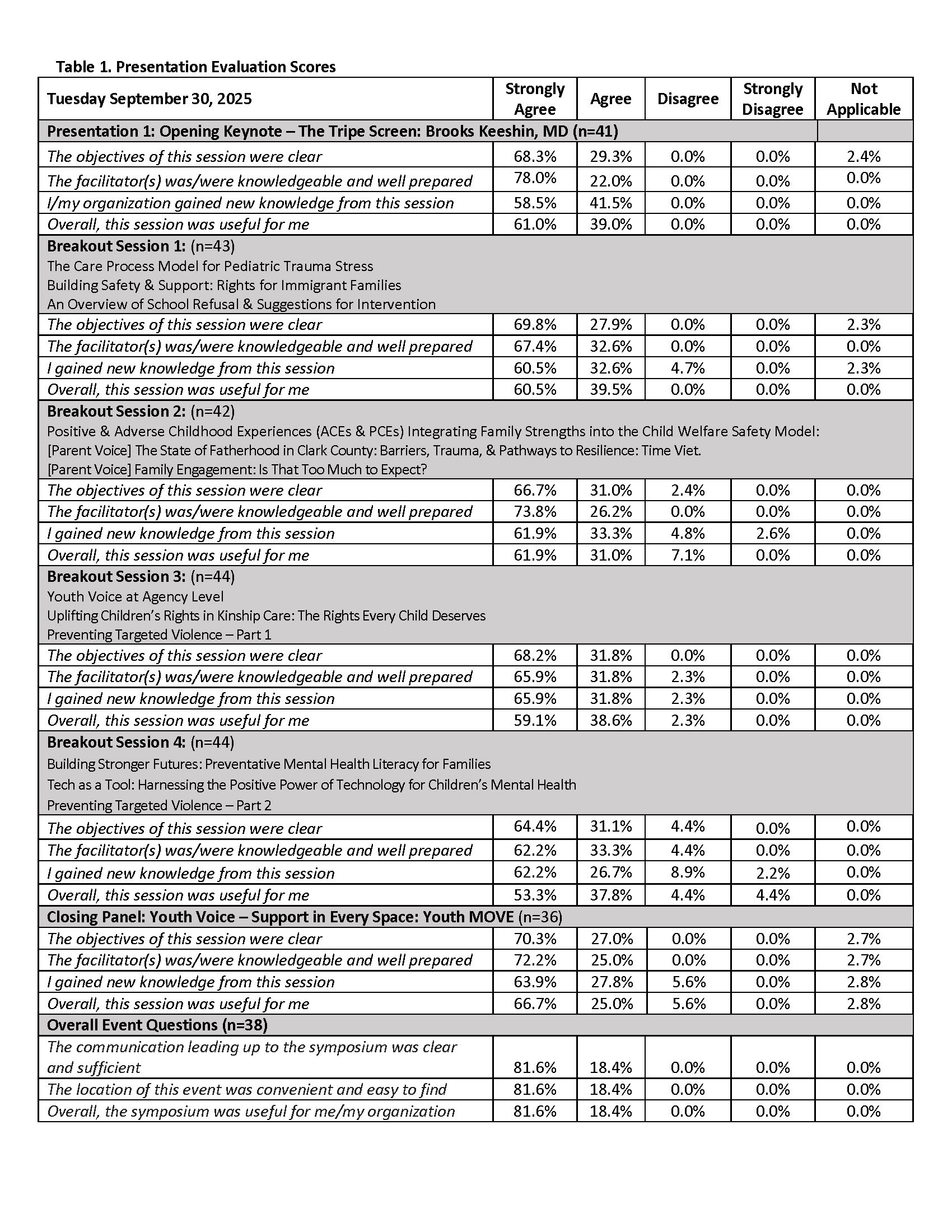
All attendees were asked to complete a brief evaluation at the end of each presentation to provide feedback on each of the sessions and the event as a whole. We received a total of 45 evaluations, though the number of responses varied for each presentation. Overall, those who completed the evaluation surveys were satisfied with the learning opportunities provided.
Overall, participants reported a highly positive and impactful conference experience, highlighting engaging presenters, a strong variety of topics, and the value of hearing directly from youth voices as motivating and informative. While feedback was overwhelmingly positive, attendees shared a few general suggestions for future events, such as minor logistical improvements and additional opportunities for engagement. Participants also expressed interest in future trainings that continue to elevate youth voice and focus on topics including mental health, trauma-informed care, substance use prevention, crisis intervention, caregiver support, and practical strategies for supporting youth and families.
A detailed breakdown of these results can be found in Table (below).
 Skip to content